Hypnotherapy Brisbane | “Be Brave” Hypnosis for Kids
Be Brave Hypnosis for Kids | Award Winning Anxiety Hypnotherapy Brisbane | Clive Westwood
Helping Children Build Courage, Confidence and a Calmer Response to Fear
Being brave does not mean a child never feels scared.
Being brave means learning:
“I can feel nervous and still do it.”
Some children naturally become overwhelmed by situations that other children appear to handle easily. They may avoid new experiences, worry about making mistakes, cling to parents or become frightened when they have to speak, perform, compete or face something unfamiliar.
A child may say:
“I’m scared.”
“I can’t do it.”
“What if something bad happens?”
“What if everyone laughs at me?”
“I don’t want to go.”
“What if I get it wrong?”
“Can you come with me?”
“I want to go home.”
“I’m too nervous.”
“What if I fail?”
Clive Westwood provides personalised hypnosis and hypnotherapy for children in Brisbane, helping suitable children develop greater confidence, courage and emotional control when facing everyday fears.
The aim is not to teach a child that fear is bad.
The aim is to help them discover that they can experience nervousness without automatically running away from the situation.
What Does Being Brave Mean for a Child?
Courage is not the absence of fear.
A brave child can still experience:
Butterflies
nervous thoughts
uncertainty
embarrassment
physical tension
self-doubt
and learn:
“This feeling does not have to stop me.”
Courage develops when children gradually discover that they are more capable than their fear tells them.
Be Brave Hypnosis for Childhood Anxiety
An anxious child may automatically imagine:
Something going wrong
being embarrassed
being laughed at
getting into trouble
failing
becoming overwhelmed
being unable to cope
The imagined situation can create a genuine physical fear response.
Hypnotherapy may help a child practise different mental and emotional responses.
Instead of automatically imagining failure, they can mentally rehearse:
Staying calm
giving something a try
recovering from mistakes
speaking confidently
remaining present
handling nervous feelings
completing the situation
feeling proud afterwards
The Childhood Fear and Avoidance Cycle
A child feels nervous about something.
They think:
“I can’t do this.”
Their body becomes more anxious.
They avoid the situation.
The anxiety immediately decreases.
Their brain learns:
“Escaping made me safe.”
The next time, the fear may become stronger.
The cycle becomes:
Fear → avoidance → relief → stronger belief in danger → more fear
Where appropriate, gradually facing manageable fears can help teach the opposite lesson:
Fear → brave action → coping → confidence → less fear
Fear of Trying New Things
Some children avoid unfamiliar experiences because they cannot predict exactly what will happen.
They may avoid:
New sports
clubs
activities
foods
school events
parties
meeting new people
unfamiliar places
Hypnotherapy may help build greater confidence around uncertainty.
Fear of Failure
A child may believe:
“If I fail, something is wrong with me.”
They may avoid trying because not trying feels safer than failing.
A healthier belief is:
“I can try, learn and improve.”
Fear of Making Mistakes
Some children become extremely worried about:
Giving the wrong answer
losing a game
making a mistake in class
forgetting something
disappointing adults
being corrected
Children can learn that mistakes are part of learning rather than proof that they are incapable.
Fear of Being Judged
A child may constantly wonder:
“What will everyone think?”
“What if they laugh?”
“What if I look stupid?”
“What if they notice I’m nervous?”
This can contribute to social anxiety and avoidance.
Shyness
A shy child may want to:
Join conversations
make friends
answer questions
participate
speak confidently
but feel unable to take the first step.
Hypnotherapy may support gradual confidence rather than trying to change the child's personality.
Social Anxiety in Children
A child may become anxious about:
Meeting people
talking to adults
joining groups
eating around others
answering questions
being watched
speaking in front of classmates
School Anxiety
School anxiety may involve:
Teachers
classmates
tests
presentations
schoolwork
getting into trouble
making mistakes
being separated from parents
Fear of Teachers
Some children become particularly nervous around teachers or authority figures.
They may:
Freeze when questioned
avoid asking for help
speak very quietly
worry about getting into trouble
become frightened by correction
assume an adult is angry with them
The aim is not to remove appropriate respect for teachers.
It is to help the child feel safe enough to communicate appropriately and confidently.
School Presentation Anxiety
Standing in front of a class can create:
Shaking
blushing
racing heart
forgetting words
stomach discomfort
fear of embarrassment
Mental rehearsal may help the child imagine standing, breathing, speaking and completing the presentation successfully.
Test and Exam Anxiety
A child may know the material but become overwhelmed during a test.
Hypnotherapy may support:
Calmer concentration
confidence
reduced catastrophic thinking
greater trust in preparation
Sports Anxiety
Children may become nervous before:
Games
competitions
races
fights
performances
trials
selections
They may fear:
Losing
disappointing parents
disappointing coaches
making mistakes
being watched
performing badly
Hypnotherapy may complement appropriate coaching and practice.
Fear of Losing
A child may become so focused on winning that competition stops being enjoyable.
They can learn:
“My job is to give my best effort. I do not control every result.”
Performance Anxiety
Performance anxiety may affect:
Sport
dancing
music
acting
public speaking
competitions
A child may mentally rehearse performing with greater calm and confidence.
Separation Anxiety
Some children become distressed when separating from:
Parents
caregivers
familiar family members
They may struggle with:
School drop-off
sleepovers
camps
activities
staying with relatives
Fear of Sleeping Alone
A child may feel safe only when a parent is nearby.
Sessions may help strengthen confidence and feelings of safety at bedtime where appropriate.
Fear of the Dark
A child's imagination may transform ordinary:
Shadows
sounds
furniture
movement
into something frightening.
Hypnotherapy may help change the emotional response to these images.
Nightmares
Recurring nightmares may cause a child to fear going to sleep.
Hypnotherapy may support calmer imagery and greater confidence returning to sleep.
Persistent or severe sleep disturbances may require medical or psychological assessment.
Fear of Dogs
A frightening experience or learned fear may cause a child to avoid dogs.
The goal should not be reckless confidence.
Children still need appropriate safety around animals.
Fear of Spiders and Insects
A child may experience an intense response to:
Spiders
insects
cockroaches
bees
Hypnotherapy may help reduce excessive fear while maintaining reasonable caution.
Fear of Needles
Children may become extremely anxious about:
Vaccinations
injections
blood tests
medical procedures
Hypnotherapy may complement appropriate medical support.
Dental Anxiety
Children may fear:
Dentists
dental equipment
pain
injections
sounds
loss of control
Hypnotherapy may support calmer coping alongside professional dental care.
Medical Anxiety
A child may become anxious around:
Doctors
hospitals
tests
scans
procedures
medication
Fear of Vomiting
Fear of vomiting may lead a child to avoid:
Food
school
travel
restaurants
other children
unfamiliar situations
Significant food restriction or weight loss requires appropriate medical assessment.
Fear of Getting Sick
Children may repeatedly ask:
“Am I going to be sick?”
“Is this food safe?”
“What if I catch something?”
“What if my stomach hurts?”
Repeated reassurance may provide only temporary relief.
Fear of Storms
Thunder, lightning and severe weather may create intense fear.
The goal is not to convince children that severe weather can never be dangerous.
It is to help them respond appropriately rather than treating every storm sound as an immediate catastrophe.
Fear of Flying
A child may become frightened by:
Turbulence
take-off
unusual sounds
heights
being unable to leave
Hypnotherapy may support calmer travel where appropriate.
Fear of School Camps
School camps may involve several fears at once:
Sleeping away from home
unfamiliar surroundings
social situations
activities
separation
embarrassment
Fear of Sleepovers
A child may want to attend but fear:
Missing home
being unable to sleep
becoming anxious
having a nightmare
other children noticing
Fear of Speaking Up
A child may know what they want to say but become too nervous to say it.
They may need confidence to:
Ask for help
answer a question
tell someone to stop
express an opinion
explain when something is wrong
Assertiveness for Children
Being assertive does not mean becoming aggressive.
A child can learn to communicate:
Calmly
clearly
respectfully
confidently
They can practise phrases such as:
“Please stop.”
“I don't like that.”
“Can you help me?”
“I don't agree.”
“I need some space.”
Confidence Around Other Children
Some children automatically assume that other children are:
More confident
stronger
smarter
more popular
better at sport
Confidence may grow when a child stops constantly comparing themselves with others.
Bullying and Confidence
Hypnotherapy may support confidence and emotional coping when bullying has affected a child.
However, bullying must be addressed directly by responsible adults and the school.
A child should never be taught simply to tolerate an unsafe situation.
Building Resilience
Resilience does not mean:
“Nothing bothers me.”
It means:
“Difficult things can happen, and I can recover.”
Learning to Handle Nervous Feelings
Children can learn that:
A racing heart can settle
butterflies can pass
nervousness does not predict failure
they can act while feeling uncertain
confidence can develop through experience
Learning to Take the First Step
The entire challenge may feel overwhelming.
The child may instead focus on:
“What is the next small brave thing I can do?”
Learning to Stop Saying “I Can't”
The aim is not forced positive thinking.
Instead of:
“I can't.”
a child might learn:
“I can try.”
Or:
“I don't know if I can do it yet.”
Learning to Trust Yourself
Confidence develops when children collect evidence:
“I tried.”
“I handled it.”
“I recovered.”
“I spoke.”
“I stayed.”
“I finished.”
“I was nervous and I still did it.”
Brave Does Not Mean Reckless
Children should never be encouraged to ignore genuine danger.
Bravery does not mean:
Going with strangers
tolerating bullying
ignoring unsafe behaviour
hiding abuse
ignoring pain
taking unnecessary risks
Healthy courage includes knowing when to:
Leave
say no
tell an adult
ask for help
protect yourself
How Hypnotherapy May Help Children Become Braver
Personalised hypnotherapy may focus on helping a child:
Build confidence
reduce excessive fear
reduce avoidance
handle nervous feelings
improve emotional regulation
increase willingness to try
reduce fear of mistakes
reduce fear of judgement
improve assertiveness
mentally rehearse challenging situations
strengthen resilience
develop confidence after setbacks
No particular outcome can be guaranteed.
What Does Hypnosis for Children Feel Like?
Children naturally use imagination during:
Stories
games
daydreaming
creative play
visualisation
Hypnosis can use focused attention and imagination in a structured way.
A child remains aware and responsive.
They do not lose control.
Will My Child Be Asleep?
No.
Hypnosis is not the same as ordinary sleep.
Can My Child Hear During Hypnosis?
Yes.
Will My Child Lose Control?
No.
A child remains able to:
Speak
move
open their eyes
disagree
stop
Does My Child Have to Close Their Eyes?
No.
Hypnosis should be adapted to the individual child.
Will You Make My Child Do Something?
No.
The purpose is to support the child's own goals, not control their behaviour.
Will Hypnosis Change My Child's Personality?
The aim is not to turn a naturally quiet child into the loudest person in the room.
A quiet child can still become:
Confident
assertive
resilient
courageous
Why Choose Clive Westwood for Children's Hypnotherapy in Brisbane?
Helping Clients Since 2013
Clive Westwood has been helping clients through hypnotherapy since 2013.
His work includes anxiety, confidence, fears, phobias, performance and emotional responses.
Personalised Sessions
Every child is different.
One child may need help with:
School anxiety
Another may struggle with:
Sport
teachers
separation
presentations
social confidence
sleep
a specific fear
Sessions are personalised around the individual child.
Child-Friendly Approach
Children should not be made to feel:
Weak
silly
immature
broken
ashamed
The focus is on developing skills and confidence.
Parent or Guardian Involvement
A parent or legal guardian should be involved when hypnotherapy is provided to a minor.
The child's willingness and suitability are also important.
No False Guarantees
Clive does not guarantee:
A cure
permanent elimination of anxiety
instant confidence
sporting results
school results
one-session success
an exact number of sessions
What Happens During a Children's Hypnotherapy Appointment?
The appointment begins with an age-appropriate conversation about what the child would like to feel more confident doing.
Rather than focusing only on:
“What are you scared of?”
the conversation may explore:
What would you like to be able to do?
Where would you like to feel braver?
What would confidence look like?
What would you do differently if the fear became smaller?
The hypnosis session may then use:
Imagination
mental rehearsal
confidence suggestions
calming techniques
future rehearsal
resilience imagery
direct suggestions appropriate to the child's goal
Can Hypnotherapy Help My Child Be Braver?
Hypnotherapy may support confidence, emotional regulation and a child's ability to approach manageable fears.
Can Hypnotherapy Help Childhood Anxiety?
It may support some children experiencing anxiety.
Significant or persistent anxiety should also be assessed by an appropriately qualified healthcare professional.
Can Hypnotherapy Help a Shy Child?
It may help a shy child become more confident without attempting to change their natural personality.
Can Hypnotherapy Help Fear of Teachers?
It may support greater calm and confidence communicating with teachers and other authority figures.
Can Hypnotherapy Help School Anxiety?
It may complement appropriate family, school, psychological and medical support.
Can Hypnotherapy Help Sports Confidence?
It may support mental preparation, focus and confidence alongside coaching and practice.
Can Hypnotherapy Help a Child Stand Up for Themselves?
It may support assertiveness and confidence.
Bullying or unsafe behaviour still requires adult intervention.
Can Hypnotherapy Help Separation Anxiety?
It may support greater confidence with appropriate separation.
Significant separation anxiety may require psychological assessment.
Can Hypnotherapy Help Fear of Sleeping Alone?
It may support gradual confidence at bedtime where appropriate.
Can Hypnotherapy Help Fear of Failure?
It may help a child become more comfortable trying, learning and making mistakes.
Can Hypnotherapy Help Fear of Making Mistakes?
It may help reduce perfectionism and excessive fear of getting things wrong.
How Many Sessions Does a Child Need?
This varies depending on:
The child's age
the concern
how long it has been present
severity
family circumstances
school circumstances
trauma
neurodevelopmental factors
current professional support
individual responsiveness
No ethical practitioner can guarantee an exact number of sessions.
When Should Other Professional Support Be Prioritised?
Appropriate medical or psychological assessment should be prioritised when a child experiences:
Severe or worsening anxiety
school refusal
significant food restriction
self-harm
suicidal thoughts
trauma
abuse
severe depression
major behavioural changes
significant sleep disturbance
persistent unexplained physical symptoms
symptoms that substantially interfere with daily functioning
Frequently Asked Questions
Is Fear Normal in Children?
Yes.
Fear is part of normal development.
Support may be helpful when fear becomes excessive or significantly limits the child's life.
Should I Force My Child to Face Their Fear?
Overwhelming or forced exposure may make fear worse.
Challenges should generally be manageable, appropriate and gradual.
Should I Keep Reassuring My Child?
Comfort and reassurance are important.
However, excessive reassurance seeking can sometimes become part of an anxiety cycle.
Should I Tell My Child to Stop Being Scared?
Fear is not usually reduced simply by being told not to feel it.
It can be more useful to help the child learn what they can do while nervous.
Can Confidence Be Learned?
Confidence can develop through experience, practice and successfully handling manageable challenges.
Does Being Brave Mean My Child Should Never Cry?
No.
Courage and emotion can exist together.
Can My Child Be Brave and Still Feel Nervous?
Yes.
That is one of the most useful lessons a child can learn.
Can Online Hypnotherapy Be Used for Children?
Online sessions may be available where appropriate depending on the child's age, needs and suitability.
Be Brave Hypnosis for Kids in Brisbane
Your child does not need to wait until every nervous feeling disappears before they begin living confidently.
They can learn:
“I can be nervous and still try.”
“I can make a mistake and recover.”
“I can ask for help.”
“I can speak up.”
“I can handle uncomfortable feelings.”
“I can do difficult things one step at a time.”
Being brave does not mean having no fear.
It means discovering that fear does not always get to make the decision.
Clive Westwood provides personalised hypnosis for children's confidence and anxiety in Brisbane, supporting suitable children who want to become braver around school, sport, social situations, presentations, separation, specific fears and everyday challenges.
Book a children's confidence and Be Brave hypnotherapy appointment with Clive Westwood today.
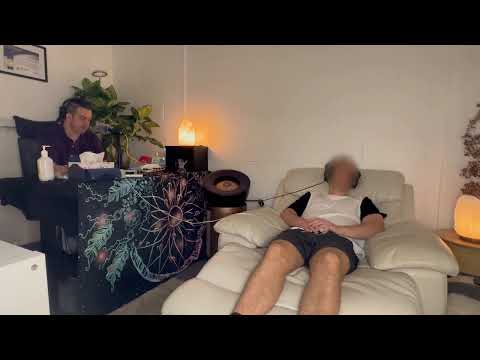
are you ready just lay your eyes
closed just
relax and focus your
attention on the rise and fall of your breath
with each breath you take you notice yourself
relaxing the more you allow
yourself to relax the better you feel and the better you feel the more you allow yourself to relax
as that
relaxation drips throughout your body and your mind I want you to imagine a beautiful flight of stairs
and there are 10 steps on this beautiful flight of stairs and each step you go down you find yourself 10 times more
relaxed starting from now 10 take the first comfortable step down now completely at
peace nine going down deeper and deeper
down eight feeling calm relaxed and
comfortable seven going deeper feeling the deep relaxation wash over
yourself six going deeper and deeper down down
five halfway down now feeling safe
circul going down deeper and deep down
down free clearing your mind completely as you let go
two going down deeper and deeper
down one almost at the basement of
relaxation feeling safe secure much more relaxed than ever
before zero you are now at the basement of relaxation feeling safe circular much more relaxed than ever before
and now I want you to imagine a safe place this can be a real place you have been to before but could just as effectively be a fantasy place in your mind coming out of this safe place into a comfortable room a room for change a room to become who you want to be
clearing your mind feeling bright and confident in every way letting go completely as you
welcome the deep relaxation
focusing your
attention on each breath you
take clearing your mind as facing each fear is easy for you
now feeling brave confident knowing that you are powerful and strong and ready to become who you want to be
believing in yourself knowing that you can become what you want feeling bright confident at all times as you feel powerful strong and ready to be in control of your mind of your life
as you feel bright and confident at all
times feeling powerful strong calm and
relaxed at all times as all of the changes and suggestions take place from now on for the rest of your life
all of the changes and suggestions take place from now on for the rest of your
life in a moment I will count from 1 to 5 and on for count of five i will say thoroughly aware and all of the changes and suggestions take place from now on for the rest of your life one feeling safe circular completely at peace two clearing silencing your mind completely free believing in yourself knowing that you are brave and confident you are powerful and strong in every
way four on next number I will say fully aware and all of the changes and suggestions take place from now on for the rest of your
life five fully aware open your eyes