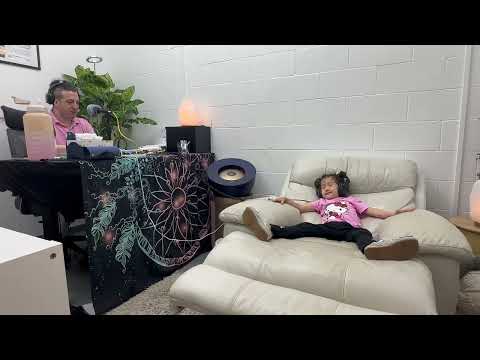
Hypnotherapy Brisbane: Confidence Hypnosis for My 4-Year-Old
Hypnotherapy Brisbane: Confidence Hypnosis for My 4-Year-Old
Gentle Confidence Hypnosis for a 4-Year-Old Child in Brisbane
At four years old:
Confidence does not need to mean:
Being:
Loud.
Outgoing.
Fearless.
Independent:
All the time.
Confidence Can Be Much Simpler
It can mean:
“I can try.”
“I can ask.”
“I can have a go.”
“I can make a mistake.”
“I can do a little bit myself.”
For a young child:
These are:
Big:
Achievements.
[EMBED CONFIDENCE HYPNOSIS FOR MY 4-YEAR-OLD VIDEO HERE]
What Does Confidence Look Like at Four Years Old?
Confidence may look like:
Walking into:
Kindy.
Preschool.
Daycare.
Trying:
A new activity.
Answering:
An adult.
Playing:
With another child.
Asking:
For something.
Trying:
To dress themselves.
Attempting:
Something difficult.
Confidence at Four Is Not:
Acting like:
A teenager.
Or:
Adult.
A 4-year-old is still:
Learning:
How the world works.
Some Fears Are Normal at This Age
Young children may worry about:
Being away from:
Parents.
New people.
Changes in routine.
The dark.
Animals.
Loud noises.
Being alone.
Getting something wrong.
Healthdirect notes that anxiety and fears can be a normal part of childhood development, including shyness and distress around separation.
So the Goal Is Not:
“Make my four-year-old fearless.”
The Goal Can Be:
“Help my child feel safe enough to explore, try and gradually become more independent.”
Confidence through Play
Four-year-olds learn:
Through:
Play.
They imagine.
Pretend.
Copy.
Explore.
Confidence work can therefore involve:
Stories.
Characters.
Games.
Imagination.
Rather than:
Long:
Adult:
Conversations.
The Brave Character Exercise
Ask your child:
To imagine:
A favourite:
Animal.
Superhero.
Character.
Ask:
“How would they try?”
Not:
“How would they win?”
Maybe:
They:
Stand tall.
Ask for help.
Try once.
Take:
One small step.
Children Can Borrow Confidence through Imagination
For example:
“Let's walk into kindy like a brave little lion.”
Not:
An angry lion.
A:
Calm.
Curious.
Steady:
Lion.
Confidence to Walk into Kindy
A four-year-old may:
Hold:
Your hand.
Hide:
Behind you.
Ask:
You to stay.
This does not automatically mean:
Something is wrong.
Separation anxiety can occur in young children, particularly around unfamiliar people, new routines and time away from carers.
A Gentle Confidence Goal Might Be:
Today:
Walk:
To the door.
Tomorrow:
Say:
Hello.
Later:
Walk in:
Holding:
The teacher's hand.
Gradually:
“I know what happens here.”
Familiarity Can Build Confidence
Children often become:
More confident:
As:
Situations become:
Predictable.
Routines can help.
For example:
Shoes.
Bag.
Cuddle.
Same goodbye.
Parent leaves.
Simple.
Predictable.
Confidence Does Not Require Long Goodbyes
Sometimes:
Repeated:
Leaving.
Returning.
Reassuring.
Leaving again.
Can make:
Separation:
Feel bigger.
A calm routine can communicate:
“You know what happens, and I trust you to manage this.”
Confidence to Speak to Adults
Some four-year-olds:
Let:
Parents:
Answer:
Everything.
Adult asks:
“What's your name?”
Parent:
Answers.
Sometimes:
Pause.
Give:
The child:
A moment.
If they want:
To answer:
Let them.
Confidence needs:
Opportunities.
But Do Not Force Performance
A child should not be:
Embarrassed.
Pressured.
Or:
Ordered:
To talk.
Confidence is:
Not:
“Perform because adults are watching.”
It is:
“Your voice matters when you are ready to use it.”
Confidence to Ask for Help
A four-year-old may need:
Help:
Often.
That is:
Normal.
But they can learn:
Simple phrases.
“Help please.”
“Can you show me?”
“I can't open it.”
Asking:
Is:
Confidence.
Confidence to Try Things Independently
Parents naturally want:
To help.
But:
Sometimes:
Helping:
Too quickly:
Removes:
The chance to discover:
“I can do it.”
Child says:
“You do it.”
Instead of immediately:
Taking over:
Try:
“You try first and I'll help if you need me.”
This creates:
Supported independence.
Confidence Is Not:
“Do everything yourself.”
It is:
“I can try before someone rescues me.”
Getting Dressed
Shoes.
Buttons.
Clothes.
These everyday:
Challenges:
Can become:
Confidence practice.
The result does not need to be:
Perfect.
Try:
“You did that part yourself.”
That creates:
Evidence.
Confidence through Small Wins
A four-year-old does not need:
Huge achievements.
They need:
Repeated experiences of:
“I tried something.”
Small successes become:
Confidence memories.
The Confidence Memory
Ask:
“Remember when you couldn't do that?”
Maybe:
Ride a scooter.
Kick a ball.
Complete a puzzle.
Now:
They can.
Say:
“You learned.”
Simple.
Powerful.
Confidence after Mistakes
Young children may become:
Frustrated:
Very quickly.
The tower:
Falls.
Drawing:
Looks wrong.
They lose:
A game.
Then:
“I can't!”
Help separate:
Mistake:
From:
Identity.
Say:
“It didn't work yet.”
Or:
“Let's try another way.”
Confidence and the Word “Yet”
“I can't do it.”
Becomes:
“I can't do it yet.”
At four:
That is enough.
No lecture required.
Confidence after Losing
Children are learning:
How to:
Lose.
And sometimes:
They:
Cry.
Become angry.
Want:
To stop.
Confidence does not mean:
Never feeling disappointed.
It means:
Learning:
“I can feel disappointed and come back.”
Confidence in Play
Another child:
Takes a toy.
Does not want to share.
Does not want to play.
A young child may interpret:
This:
Very personally.
Parents can help with:
Simple alternatives.
“You can ask.”
“You can choose another toy.”
“You can play with someone else.”
Confidence Is Flexibility
Not:
Getting:
Exactly:
What you want:
Every time.
Confidence Making Friends
At four:
Friendship skills are:
Still developing.
Children may need help learning:
How to:
Join.
Share.
Wait.
Ask.
A simple phrase:
“Can I play?”
Can become:
A confidence skill.
But Friendship Cannot Be Guaranteed
Hypnosis cannot:
Make:
Other children:
Choose:
Your child.
Confidence means:
Learning:
To:
Connect.
Recover.
Try again.
Confidence for a Shy 4-Year-Old
A shy child is not automatically:
An anxious child.
Some children:
Warm up:
Slowly.
Observe:
Before:
Joining.
Prefer:
One or two people.
That can be:
Temperament.
Healthdirect advises parents to avoid repeatedly labelling children as “shy” or “anxious”, because these labels can become part of how a child sees themselves.
Instead of:
“She's very shy.”
Try:
“She likes to watch for a little while first.”
That leaves:
Room:
For change.
Confidence for Sensitive Children
Some four-year-olds are:
Sensitive.
To:
Noise.
Criticism.
Tone.
Crowds.
Change.
Sensitivity does not mean:
Weakness.
Confidence may mean:
“I can feel things strongly and still find my way through.”
Confidence around Adults
Some young children:
Freeze.
Go quiet.
Hide.
This can be normal:
Especially:
With unfamiliar adults.
Gradual familiarity:
May help.
Do not force:
Eye contact.
Talking.
Hugging.
Affection.
Confidence Includes Boundaries
A confident child should learn:
“My body belongs to me.”
And:
“I can tell a trusted adult if something feels wrong.”
Confidence Is Not Obedience
Hypnosis should never be used to:
Make:
A four-year-old:
More compliant.
Confidence includes:
Having:
A voice.
A child should be allowed to:
Say:
No.
Ask:
Questions.
Tell:
A trusted adult.
Confidence around Teachers
A young child may:
Feel nervous:
Around:
Teachers.
Especially:
New ones.
Confidence may be:
Saying:
Hello.
Showing:
Their work.
Asking:
For help.
But:
If your child becomes:
Suddenly:
Very afraid:
Of a particular adult:
That deserves:
Attention.
Do not simply:
Hypnotise:
The fear away.
Understand:
Why.
Confidence and New Experiences
First:
Swimming lesson.
Dance.
Sport.
Birthday party.
New childcare.
A child may say:
“No!”
Sometimes:
They genuinely:
Do not want to participate.
Sometimes:
Fear:
Is making:
The choice.
A useful response:
“Would you like to watch first?”
Watching can be:
The first:
Step.
Then:
Maybe:
Joining:
For:
Two minutes.
Confidence Can Grow Gradually
Healthdirect recommends acknowledging children’s fears, encouraging them gently and slowly to attempt feared activities, and praising their effort.
Do Not Throw a 4-Year-Old into the Deep End
Confidence does not grow through:
Humiliation.
Force.
Threats.
A child should not:
Have to prove:
Bravery.
Smaller steps:
Are often:
More useful.
The Tiny-Brave-Step Exercise
Ask:
“What's one tiny brave thing?”
Maybe:
Wave.
Say hello.
Walk:
Two steps.
Try:
Once.
Tiny:
Is:
Fine.
Praise the Attempt
Instead of:
“See! That wasn't scary.”
Try:
“You felt nervous and you tried.”
Why?
Because:
“That wasn't scary”
Can accidentally tell:
The child:
Their feeling:
Was wrong.
Whereas:
“You tried”
Focuses:
On:
Their ability.
Confidence through Positive Self-Talk
Healthdirect notes that positive self-talk can support confidence and willingness to keep trying when something is difficult.
For a Four-Year-Old:
Keep it:
Very simple.
“I can try.”
“I can learn.”
“I can ask for help.”
“I can do one little step.”
Avoid:
Long affirmations.
The Calm-and-Brave Breath
Do not make breathing:
Complicated.
Try:
Smell:
The flower.
Blow:
The candle.
Slow.
Gentle.
Then:
“Let's do our little brave step.”
The Confidence Colour
Ask:
“What colour feels brave?”
Blue?
Gold?
Green?
Pink?
Imagine:
That colour:
Around:
Their body.
Then:
Take:
The brave colour:
Into:
Kindy.
Sport.
A new activity.
Young children often respond well to:
Simple:
Imagination.
The Brave Animal
Ask:
“What animal feels brave today?”
Lion.
Tiger.
Elephant.
Dog.
Then:
“How does your brave elephant walk into the room?”
Make it:
Playful.
Confidence Hypnosis for a 4-Year-Old
At this age:
Hypnosis should not look like:
An adult:
Clinical:
Performance.
It may involve:
Stories.
Imagination.
Pretend.
Calm attention.
Simple suggestions.
A four-year-old does not need to understand:
Complex hypnosis terminology.
They need to:
Feel:
Safe.
Comfortable.
Interested.
Hypnosis Does Not Require Eye Closure
A young child can:
Move.
Speak.
Open their eyes.
Laugh.
Imagine.
Hypnosis is not:
Unconsciousness.
A 4-Year-Old Should Never Be Forced to Participate
If they:
Do not want:
To engage:
Do not:
Force:
Them.
Confidence cannot be built through:
Powerlessness.
Hypnosis Is Not Mind Control
A hypnotherapist should never:
Attempt to:
Control:
A child's:
Behaviour.
Or:
Force:
Disclosure.
Or:
Recover supposed:
Hidden memories.
The Focus Should Remain:
Here.
Now.
What is:
The child:
Finding difficult?
What small skill:
Might help?
Confidence through Parent Language
Parents have:
Powerful influence:
Over:
How children interpret:
Challenges.
Instead of:
“Be careful!”
For everything:
Sometimes:
Use:
“Take your time.”
Instead of:
“You can't do that.”
Try:
“Let's find a safe way.”
Instead of:
“You're scared.”
Try:
“That feels new.”
Language can:
Leave:
Possibility.
Confidence through Choice
Four-year-olds often benefit from:
Small:
Choices.
Not:
“What do you want to do today?”
Too big.
Try:
“Red shirt or blue shirt?”
“Walk in or hold my hand?”
“Do you want to try first or watch first?”
Choice supports:
Agency.
Confidence through Responsibility
Age-appropriate responsibilities can help children feel:
Capable.
Put:
Toy away.
Carry:
Small bag.
Help:
Set the table.
Then:
“You helped.”
Contribution can build:
Competence.
Confidence and Constant Praise
Children do not need:
Continuous:
“You're amazing!”
Instead:
Notice:
Specific behaviour.
“You kept trying.”
“You asked for help.”
“You did that part yourself.”
This creates:
Useful feedback.
Confidence Is Not Perfection
A confident four-year-old:
Will still:
Cry.
Get frustrated.
Hide.
Need parents.
Make mistakes.
That is:
Childhood.
Confidence Is:
Gradually developing:
“I can cope with more than I used to.”
What If My Child Says “I Can't” Constantly?
Do not necessarily argue:
“Yes you can!”
Try:
“Which part feels hard?”
Then:
Make:
The task:
Smaller.
Confidence can begin:
With:
The first:
Part.
What If My Child Wants Me to Do Everything?
Sometimes:
Start:
Together.
Parent does:
The first:
Bit.
Child does:
Next:
Bit.
Gradually:
Shift:
Responsibility.
The message becomes:
“I help you learn.”
Not:
“I do everything because you can't.”
What If My Child Is Afraid of Failure?
At four:
Failure often means:
“It didn't work.”
Keep it:
Light.
Model:
Mistakes.
“Oops. Daddy got that wrong. I'll try again.”
Children learn:
By:
Watching.
Confidence and Emotional Regulation
A four-year-old's emotions can be:
Big.
Confidence does not mean:
Stopping:
Big emotions.
It may mean:
Helping them learn:
“I can calm down again.”
After:
Anger.
Fear.
Disappointment.
Recovery Is Confidence
Confidence and Separation
A child can:
Miss:
A parent.
And:
Still learn:
To settle.
Healthdirect notes that separation distress is common in young children, but if separation anxiety becomes unusually intense, persistent or disruptive, professional assessment may be appropriate.
When Confidence Problems May Need More Assessment
A four-year-old may need broader support if fear or distress is:
Persistent.
Severe.
Increasing.
Or:
Interfering significantly with:
Childcare.
Preschool.
Play.
Sleep.
Eating.
Family life.
Healthdirect recommends seeking professional help when a child's anxiety is impacting their life or causing concern.
Look at the Whole Child
Low confidence may sometimes relate to:
Development.
Speech.
Language.
Hearing.
Learning.
Social communication.
Sensory differences.
Anxiety.
Family stress.
Bullying.
Physical health.
Do not automatically assume:
“It's just confidence.”
Appropriate Support May Include:
A:
GP.
Paediatrician.
Psychologist.
Speech pathologist.
Occupational therapist.
Early-childhood professional.
Depending on:
What is happening.
Hypnotherapy Is Complementary
For a young child:
Hypnotherapy should not replace:
Appropriate:
Developmental.
Medical.
Psychological.
Educational.
Or:
Other professional assessment.
Direct Suggestions for Confidence Hypnosis for a 4-Year-Old
Suggestions can remain:
Simple.
You can try.
You can learn.
You can ask for help.
You can take one little step.
You can be nervous and still try.
You can make mistakes and try again.
You can use your voice.
You can tell a grown-up when you need help.
You can do more things as you grow.
You can feel proud when you have a go.
You can take your brave feeling with you.
You can be yourself.
Frequently Asked Questions about Confidence Hypnosis for a 4-Year-Old
Can a 4-Year-Old Be Hypnotised?
Young children naturally use imagination and focused attention, but suitability for formal hypnotherapy depends on the individual child's development, willingness, needs and the concern being addressed.
At four, any approach should be simple, playful, child-friendly and developmentally appropriate.
Can Hypnosis Make My 4-Year-Old More Confident?
Hypnotherapy may be used as complementary support for confidence-related patterns through imagination, simple suggestion and mental rehearsal.
No result should be guaranteed.
Is My 4-Year-Old Too Shy?
Not necessarily.
Some children naturally take longer to warm up.
The more important question is whether fear is causing significant distress or stopping your child from participating in age-appropriate everyday activities.
Can Hypnosis Help Preschool Confidence?
It may support confidence-related fears around separation, new situations, interacting with others and trying things.
Real problems in the preschool environment should also be addressed directly.
Can It Help Separation Anxiety?
It may complement broader support, but significant or persistent separation anxiety deserves appropriate professional assessment.
Can It Help My Child Speak More?
Confidence work may help when hesitation is primarily anxiety-related.
If there are concerns about speech, language or communication development, a qualified speech pathologist or other appropriate professional should assess them.
Will My Child Need to Sit Still?
Not necessarily.
Young children naturally move.
A child-friendly approach should work with their developmental level rather than expecting adult behaviour.
Does My Child Have to Close Their Eyes?
No.
Will My Child Be Unconscious?
No.
Can Hypnosis Make My Child Behave?
That should not be the purpose.
Hypnosis should never be used to force obedience.
Can Hypnosis Make My Child Fearless?
That should not be the goal.
Appropriate fear helps protect children.
What If My Child Does Not Want to Participate?
They should not be forced.
Should Parents Be Involved?
For a four-year-old:
Parent or legal guardian involvement is important.
Why Choose Clive Westwood for Kids Hypnotherapy Brisbane?
Helping Clients Since 2013
Clive Westwood has been helping clients through clinical hypnotherapy since 2013.
His work includes people seeking support around:
Confidence.
Fear.
Anxiety.
Nervousness.
Self-belief.
And:
Related patterns.
A 4-Year-Old Needs a Child-Friendly Approach
A four-year-old does not need:
Complicated:
Therapeutic:
Language.
They need:
Safety.
Imagination.
Simplicity.
Encouragement.
Confidence work should fit:
The:
Child.
Not force:
The child:
To fit:
The therapy.
Personalised Confidence Support
One four-year-old may need more confidence:
Walking into:
Preschool.
Another:
Speaking to:
Adults.
Another:
Joining:
Other children.
Another:
Trying:
New things.
Another:
Separating:
From:
A parent.
The useful question is:
“Where exactly does my child lose confidence?”
Hypnotherapy Brisbane for Young Children
Where appropriate, personalised child-friendly hypnotherapy is available in Brisbane with parent or legal guardian involvement.
Confidence at Four Years Old
Does not need to mean:
“I can do everything.”
It can mean:
“I can try.”
It does not need to mean:
“I'm never scared.”
It can mean:
“I can take one little step.”
It does not need to mean:
“I don't need Mum or Dad.”
It can mean:
“I can do a little more for myself.”
It does not need to mean:
“I never make mistakes.”
It can mean:
“I can try again.”
And Little by Little:
Those experiences can begin building:
A simple:
Healthy:
Belief.
“I Can Handle This.”
Hypnotherapy Brisbane: Confidence Hypnosis for My 4-Year-Old
Clive Westwood provides personalised child-friendly hypnotherapy in Brisbane where appropriate for young children experiencing confidence-related fears, nervousness, shyness, hesitation, difficulty trying new things and other anxiety-related confidence patterns, with parent or legal guardian involvement.
Confidence hypnosis for a four-year-old should not be about turning a quiet child into an extrovert, forcing independence or trying to remove normal childhood fears. The aim is to use simple, age-appropriate imagination and encouragement to support small experiences of capability: trying, asking for help, coping with mistakes, becoming gradually more independent and discovering, “I can have a go.”
you ready just lay your eyes close just
relax and focus your attention on the rise and
fall of your breath
with each breath you take you notice
yourself
relaxing the more you allow yourself to relax
the better you feel and the better you feel the more you allow yourself to relax
as that relaxation drifts throughout your body and your
mind just
allow
yourself to feel calm
relaxed with each breath you
take just imagine going down a beautiful set of stairs and each step feeling more relaxed
10 take the first comfortable step down
now nine going down deeper and deeper
down eight clearing your mind letting go from deep
within seven going down deeper and deeper
down down
down six being at peace in every way as
you feel safe and comfortable
five halfway
down now feeling safe circular much more relaxed than ever
before four going down deeper and deeper
down free clearing your mind in every way letting go
going down deeper and deeper
down almost at the basin of relaxation
feelings circular much more relax and
ever zero you are now at the basement of relaxation feeling safe
secure much more [Music] relaxed than ever
before just imagine a safe place this can be a real place you have been to before but could just as effectively be a fantasy place in your
mind coming out of this site [Music] place and a comfortable room a room for change a room to become who you want to be feeling confident and
brave facing each fear knowing you are powerful and
strong and ready to
become
confident and to be who you want to be
feeling bright in every
way knowing that you are strong powerful and smart as you
believe in yourself
knowing that you can
become what you
want as you face each
fear always feeling brave and
confident as
you
feel power at all
times as you relax
as all of their changes and suggestions take place from now on for the breath of your life all of the [Music] changes and suggestions take place from now on for the rest of your
life in a moment I will count from one to five and on for a count of five i will say fully
aware feeling safe calm and relaxed two finding it easy and relaxing to face each fear completely
free knowing that you are brave comfortered powerful and strong and can easily do what you want to do becoming what you want
four on next number I will say fully aware and all of the changes and suggestions take place from now on for the rest of your
life five fully aware open your eyes